Happy International Women’s Day
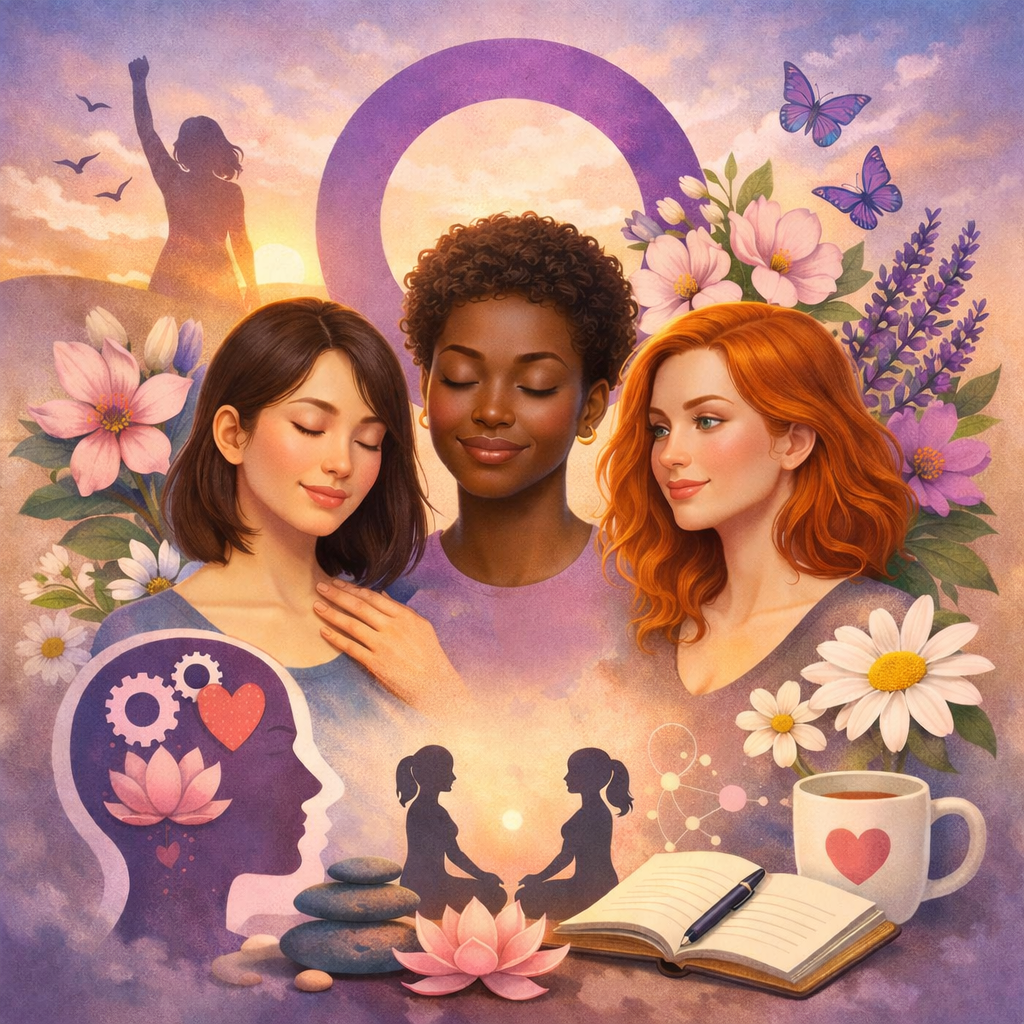
What Being a Woman Has Taught Me (Through My Own Life and Through My Clients)
As a CBT psychotherapist, and a woman navigating her Mid 30’s I spend much of my week listening to women’s stories. Their fears, their resilience, their doubts, their strength. Over time, I’ve noticed many of the themes that show up in the therapy room mirror experiences I’ve encountered in my own life as a woman. Different ages, backgrounds, careers and relationships yet so many shared experiences.
Women Are Taught to Be Responsible for Everyone’s Feelings
One of the most common patterns I see in therapy is women feeling responsible for the emotional comfort of everyone around them.
Partners. Parents. Friends. Colleagues. Even strangers.
Many women grow up learning, often subtly, that being “good” means being accommodating, agreeable, and emotionally available. The problem is that this can easily turn into chronic people-pleasing, difficulty setting boundaries, and a quiet erosion of one’s own needs.
In therapy, a lot of our work involves gently challenging the belief that being kind means abandoning yourself. It doesn’t. Healthy relationships require mutual care, not silent self-sacrifice.
Self-Doubt Is Often Learned, Not Inherent
I meet incredibly capable women who doubt themselves constantly.
They question whether they’re good enough at work, in relationships, as mothers, as daughters, as friends.
Yet when we explore the evidence, there is often an enormous gap between how competent they actually are and how competent they feel (Welcome to the party imposter syndrome).
Many women have internalised the idea that confidence should be earned through perfection. If there’s even a small mistake, the mind quickly concludes: I’m not good enough.
CBT work often involves helping women notice these thinking patterns the harsh inner critic, the mental filtering of achievements, the tendency to minimise strengths.
Confidence rarely comes from eliminating doubt. It comes from learning not to believe every critical thought your mind produces.
Boundaries Are One of the Hardest Skills to Learn
Another theme I see repeatedly is how difficult it is for women to say:
• “No.”
• “That doesn’t work for me.”
• “I need something different.”
• “I need some help”
Many women worry that setting boundaries will make them selfish, difficult, or unkind.
In reality, boundaries are what make relationships sustainable. Without them, resentment quietly builds beneath the surface.
One of the most powerful shifts I see in therapy is when a woman realises she is allowed to prioritise her wellbeing without apologising for it.
Women Live with a Hormonal Rhythm That the World Often Ignores
Another important theme I’ve noticed is how little space society makes for the biological realities of being female.Women live with hormonal rhythms that shift across the menstrual cycle and across life stages from puberty, through reproductive years, pregnancy, postpartum, perimenopause and menopause.
Hormones can influence mood, energy, concentration, sleep, and emotional sensitivity. Yet many women have grown up without understanding these shifts, sometimes assuming something is “wrong” with them when in fact their body is simply moving through a natural cycle.
Learning about the menstrual cycle and hormonal health can be incredibly empowering. I often encourage clients to develop curiosity about their hormonal patterns rather than judging themselves for them. When women understand the patterns within their own bodies, they often experience less confusion and more self-trust.
Women Are Often Much Stronger Than They Realise
Despite all the challenges women face social expectations, emotional labour, competing roles the resilience I see in women is extraordinary.
I’ve worked with women navigating grief, trauma, burnout, difficult relationships, infertility, career pressure, motherhood, loneliness, and major life transitions.
Again and again, I’m reminded how adaptable and resourceful women can be when they start trusting their own voice.
Often the work in therapy isn’t about “fixing” women. It’s about helping them reconnect with strengths that were already there.
Books I Often Recommend to Female Clients
Over the years, certain books come up repeatedly in conversations with clients. These are books many women have found helpful in understanding themselves, their bodies, their boundaries, and the wider social pressures women navigate.
Untamed – Glennon Doyle
A powerful book about identity, authenticity and learning to listen to your own inner voice rather than the expectations placed upon you.
Period Power – Maisie Hill
An accessible and empowering guide to understanding the menstrual cycle and how hormonal shifts can influence energy, mood, productivity and wellbeing.
Wild Power – Alexandra Pope & Sjanie Hugo Wurlitzer
A thoughtful exploration of the emotional, psychological and creative shifts that occur across the menstrual cycle.
Relaxed Woman – Nicola Jane Hobbs
A compassionate look at burnout, chronic stress, and why so many women struggle to rest in a culture that rewards constant productivity.
Why Women Are Poorer Than Men – Annabelle Williams
A really eye-opening book about the financial realities many women face across their lifetime, from pay gaps to career breaks and structural inequalities.
Girls Just Wanna Have Funds – Camilla Falkenberg
A practical and accessible introduction to financial confidence and building a healthier relationship with money.
A Final Thought
If there’s one thing I’ve learned through both my own life and my work with women, it’s this:
Many women are far harder on themselves than they would ever be on someone they love.
The role of therapy often involves learning a different relationship with your own mind one that includes more curiosity, more compassion, and fewer impossible standards.
Most women don’t need to become stronger. Most of the time, they simply need permission to recognise that they already are.